


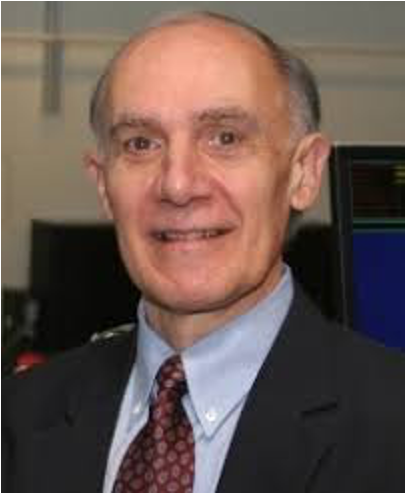
Dr. Arthur Clark Sanderson, Professor Emeritus in the Department of Electrical, Computer, and Systems Engineering at Rensselaer Polytechnic Institute (RPI), Troy, New York, died on December 14, 2025, at the age of 79, from complications of Parkinson’s disease, at his winter residence in Bonita Springs, Florida.
Born on October 23, 1946, in Providence, Rhode Island, Arthur was the son of Robert L. Sanderson and Julia A. Oldham, both educators and alumni of Brown and Pembroke Universities. He demonstrated early excellence in both scholarship and athletics, earning a Westinghouse Science Award and becoming a Rhode Island high school champion in the high hurdles. He received his B.S. degree from Brown University and his M.S. and Ph.D. degrees from Carnegie Mellon University.
Arthur enjoyed running, rowing, windsurfing, and skiing. He was an accomplished guitarist, banjo player, photographer and watercolorist, hobbies that he continued to pursue even as Parkinson’s disease diminished his physical abilities.
Dr. Sanderson was Co-Director of the Robotics Institute at Carnegie Mellon University, and then Professor and Department Head of Electrical, Computer, and Systems Engineering at Rensselaer Polytechnic Institute, from 1987 to 1994. He also served as Director of Information Sciences at Philips Laboratories in Briarcliff Manor, New York, from 1985 to 1987. In 1989, Dr. Sanderson was instrumental in establishing the IEEE Robotics and Automation Society and served as its founding President. He was a Fellow of the IEEE and a recipient of the IEEE Millennium Medal. From 1998 to 2000, he served as Division Director for Electrical and Communications Systems Research at the National Science Foundation in Arlington, Virginia. From 2000 through 2004, he returned to Rensselaer as Vice President for Research.
From 2009 to 2010, he served as Deputy Director of the NSF Smart Lighting Engineering Research Center at Rensselaer. In 2010–2011, he was selected as a Jefferson Science Fellow and served in the U.S. Department of State in Washington, DC, where he conducted assessments and forecasts of scientific and technological developments relevant to international arms control, verification, and compliance.
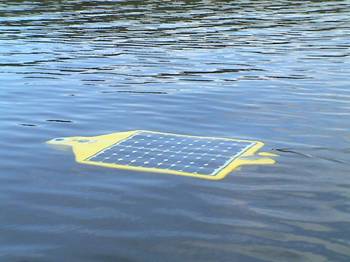
Dr. Sanderson authored more than 250 journal and conference publications and six books in the areas of biomedical signal processing, robotics and automation systems, and sensor-based control. His research on sensor-based robotic control, planning and reasoning for intelligent systems, distributed sensor networks, and neural networks contributed to the development of many modern technologies, including artificial intelligence (AI) and driverless cars. He applied this work across manufacturing, biomedical engineering, environmental monitoring, space exploration, and security and defense systems. His work included the development of autonomous underwater vehicles and distributed sensing systems for environmental and security applications.
He held numerous international visiting appointments, including at Delft University of Technology in the Netherlands; Universidad Iberoamericana in Mexico, where he established the institution’s first biomedical engineering program; and the University of Tsukuba in Japan. He also served as a Visiting Research Fellow at the Autonomous Undersea Systems Institute in Florida and as Senior Research Advisor to The Beacon Institute for Rivers and Estuaries in New York.
Dr. Sanderson was married for 55 years to Dr. Susan R. Sanderson (née Walsh). He is survived by his two children, Dr. Angeline S. Andrew of Bethel, Maine, and Andrew M. Sanderson of London, England, and by four grandchildren: Justin and Dirk Andrew, and Maggie and Julia Sanderson. He was predeceased by his brother, David W. Sanderson. He is also survived by numerous nieces and nephews and was a devoted brother-in-law to his wife’s siblings.
A memorial service will be held in the summer of 2026 at McWain Farm, the family homestead in East Waterford, Maine. In lieu of flowers, donations may be made to a charity of your choice.
Obituary from CMU: Arthur C. Sanderson Helped Found Robotics Institute
Remembrance of Art's legacy and impact from colleagues:
John Wen: Art hired me in 1988 (I was his first hire). He had been a mentor, a role model, and a friend for over 30 years. I always admired Art’s gift as an administrator. He was strategic and focused, but also courteous and even-keeled. He was so generous with his help — the Smart Lighting ERC would not have survived without him. I’m deeply saddened by Art’s passing and will miss Art’s keen insight and guidance.
Ken Connor: Art was a class act, as is more than apparent from the nice things everyone has already said. I had the good fortune to work with some very special people in my time at RPI, but he became department head at exactly the right time for me and the rest of the plasma research group. Even though he came from a very different part of electrical and computer engineering than our bunch of applied physicist/engineers, he helped us to build and sustain something special. Maybe being almost exactly the same age had something to do with it, but we definitely clicked. Even more likely was that he was outstanding at helping everyone he worked with be better. Maybe he was just so good at what he did (I think he was the best systems engineer I ever met) while also being able to fully get to know other people and develop relationships built on mutual respect. Probably ... all of the above. He certainly made my life better and made RPI a better place. We will all miss him but also have great memories.
Hussein Abouzeid: When Art was VP for Research, I remember how keen he was to make sure every faculty’s notable research is represented in RPI's slide portfolio that he prepared. As a member of the ECSE department's P&T review committee, he was gracious and generous with his time and advice. He was always a man of just the right amount of words. His solar underwater robots were so unique.
Ron Gutman: Art was always an outstanding person, combining a wonderful head with a well focused heart. Being in a different technical focus, I didn’t interact with him often, but I now have a common end-of-life experience, Parkinson’s. God bless the Sanderson family.
Ishwara Bhat: I have fond memories of him and I still remember talking to him in his office about my plans when he hired me in 1991, after Soli retired. He gave me good advice then. Later on when I wanted to buy a spectroscopic ellipsometer, he cost shared about $19K. That resulted in a few external research contracts and two PhD students. He was very good in teaching undergraduate courses like I think discrete time systems. Clearly remember some of my urp students talking about the courses they took from him. I was thinking about his whereabouts a few months ago. He will be missed.
Michael Shur: Art was a true gentleman who did so much for the Department. He treated people with compassion and understanding and was a great leader. Our research interests overlapped a bit on the lighting side, and I missed his presence after he retired. My sincere condolences to his family, friends, and colleagues.
Rich Radke: This is sad news indeed. Art was a real gentleman and I don’t think I ever saw him ruffled, even though the early days of the ERC were challenging. I mainly appreciated Art’s work-life balance; I remember asking his advice about places to visit in Hawaii since IIRC he had gone there several times for windsurfing.
Meng Wang: This is such a sad news. Athough I did not have extensive interactions with him, he left a strong impression on me. He was mentally sharp, energetic, and carried himself with quiet dignity. This is how I will remember him.
Ali Tajer: Very sad news. He was such a gentleman. Before he retired, we occasionally ran into each other at a couple of coffee shops in Saratoga on weekends. Always super pleasant conversations. I also vividly remember him sitting at the back of the room when I gave my job talk in JEC 3117. His eyes were showing all the attention he was paying.
Birsen Yazici: I am very saddened to hear this. I served in a couple of student committees with Art and took over teaching pattern recognition from him. He was a gentleman and definitely had leadership qualities.
Kim Boyer: I can remember reading his papers when I was a grad student at Purdue - and then felt honored to work with him when I joined RPI. The two words that come to mind when I think of Art are “brilliant" and a “gentleman.” Such an extraordinary human being. Please accept and convey my condolences to everyone there.
Bruno Siciliano (Professor, University of Naples Federico II) & Oussama Khatib (Professor, Stanford University)
Art Sanderson belongs to that generation of pioneers who contributed to shaping the state of the art of modern robotics. A true visionary, he was co-founder and Director of the prestigious Robotics Institute at Carnegie Mellon University. Our community is especially grateful to him for his intrepid 1989 founding and initial presidency of the IEEE Robotics and Automation Society, following its incubation as a Council during the previous five years.
Beyond his valuable research contributions to the field — including flexible assembly, robot sensors, intelligent manufacturing systems, and sensor-based control — our most vivid memory is of the true gentleman he was. In his interactions with colleagues he was always elegant, thoughtful, and respectful of others' opinions, Art set a standard for our robotics community and beyond, nurturing that spirit of camaraderie that became a model for subsequent leaders.
He will also be missed for his role as an inspiration, particularly to younger generations of roboticists. His lectures at summer schools and presentations at workshops and symposia around the world often conveyed noble life lessons that extended well beyond their technical content.
Thank you, Art, for your positive spirit and your enduring friendship.
Bruno & Oussama
Bill Hamel, Professor Emeritus, University of Tennessee
I first became involved in RAS around the time of Art’s presidency (of IEEE Robotics and Automation Society). It was clear that his leadership played a key role in the formation and success of the society. Later, I benefited from direct interactions with him when he and Norman Caplan asked me to consider serving as the general chairman for ICRA 2002 to be held in Washington, DC. I was aware of the challenges associated with organizing and executing an ICRA and declined the offer as I didn’t feel qualified. Art continued to encourage me and his offer to support me and assist me through the process swayed me to accept. He did just that and his mentorship was major factor in the ultimate success of ICRA 2002. His readiness to help, kindness and sincerity were amazing, and I have tried to carry his example throughout my career. Few people have so much positive impact in so many ways on so many people.
Comments on LinkedIn:
Raj Subbu, President and Managing Member at DisputeSoft
I am deeply saddened. I was Art’s PhD student from 1996 - 2000. A rare kind hearted gentleman with immense grace and an incredible intellect. Never ruffled, always patient, and always set high standards for himself and his students. A true role model. Please keep us informed of the ‘26 memorial service.
Badri Roysam, Professor of Electrical & Computer Engineering, and Computer Science, University of Houston
I am saddened by this news. Dr. Sanderson hired me back in 1989, and was a terrific mentor. A classy soft-spoken gentlemen who exuded immense wisdom and grace.
John Kolb, Vice President and Head of the Future of Computing Institute (FOCI) at Rensselaer Polytechnic Institute
Art was an amazingly talented person who shared generously with the rest of the world. He will be missed.
Anna Dyson, Founding Director, Yale Center for Ecosystems + Architecture (Yale CEA), Hines Professor of Architecture at Yale University
That is very sad news! Art was the best of us!
Nancy Preston
So sad to read this. Art was one of those professors I always enjoyed working with. Creative. Collaborative. Caring.
Jonathan Dordick, Institute Professor and Vice President for Strategic Alliances and Translation at Rensselaer Polytechnic Institute
I’m very sorry to hear of Art’s passing. He was a strong supporter of the development of our Center for Biotechnology and Interdisciplinary Studies. He was also a tremendous help and resource during my time as Vice President for Research. May his memory be a blessing.
Jodi Ackerman Frank, Writer, editor, publications, strategic communications
I’m so sorry to hear of Art’s passing. I remember collaborating with him on several stories about his leading research, including his team’s work on solar-powered autonomous underwater vehicles as part of the NSF’s RiverNet project. No matter how busy he was, Art was always kind, accessible, and professional.
William R. Hamel, Retired and Professor Emeritus at University of Tennessee
Art will be missed by many. He was an incredible mentor to me in my early days in the Robotics and Automation Society. He was so inviting to all and genuinely humble with respect for everyone.
Chuck Rancourt, mentor - entrepreneurship and innovation
I am very sad to hear this news about passing of Art. I remember working with Art on a proposal and rushing to meet the mailing deadline. Very sorry Susan for your loss.
Mike Shimazu, Senior Advisor | Clean Energy & Hard Tech Innovation | Founder | Ecosystem Champion
Art was such a gentleman and such an impactful leader, no matter his official role. His example and influence echo on as the best of RPI's culture.
Omkaram Nalamasu, CTO and Senior VP, Applied Materials; President of Applied Ventures, LLC (Venture arm of Applied Materials)
I am so sad to hear of the passing of Art. I had the honor of taking the baton from him as the VP of Research at RPI and grow the research enterprise built on the solid foundation he laid. He was a scholar, wonderful teacher, gentleman and a noble soul. May his soul rest in peace.
Samara Hannah, Leadership, Strategy, Relationships, Impact
Such a wonderful person.
Gaurav Sukhatme, Donald M. Alstadt Chair in Advanced Computing, Director of the USC School of Advanced Computing and Executive Vice Dean of the USC Viterbi School of Engineering at the University of Southern California
Very sad to hear this news. Art was a wonderful person and a robotics pioneer!
Vijay Kumar, Dean, Penn Engineering
Very sad. A big loss for RPI and the robotics community
David Mendonça, Senior Researcher, Educator, and Director for Public / Private Partnerships, Higher Education Administration, Technological Innovation
A real giant of RPI.
M. H. Toufiq Imam, Staff Design (Algorithm) Engineer at ASML
So sorry to hear the news. Have happy memories with Prof Sanderson. A kind, encouraging mentor. Even a better Human Being!
Jagdish Joshi, Curious Seeker
Great personality and amazing educator. Rest in peace
Deepak Vashishth, Co-Director Rensselaer - Icahn School of Medicine Mount Sinai Center for Engineering and Precision Medicine (CEPM)
So sorry to hear of Art passing away. I interacted with him during his term as VPR and he with Ken Gertz was instrumental in getting young faculty at RPI connected with NSF and other federal agencies.
Shivkumar Kalyanaraman, CEO, Anusandhan National Research Foundation (ANRF), Govt of India | Distinguished Alumnus (IIT Madras & Ohio State)
Deep condolences. I fondly remember many conversations with Art
Indrani Bhattacharya, Assistant Professor of Biomedical Data Science @ Dartmouth
This is such a sad news! Dr Sanderson was such a kind Professor, always encouraging and supportive.
S.S. Krishnan, Climate and energy research modelling and policy, ESG, Low carbon energy policy expert, industrial decarbonisation in steel and cement, and buildings, carbon trading
My heartfelt condolences. Art was my PhD supervisor and a fantastic person, kind, generous and great mentor, extremely patient with my crazy ideas. I was his student during 1989 thru 1992; he had visited my house in Bangalore in 1993 and we still have fond memories of that visit. I used to keep in touch fairly regularly for new year wishes and my interaction with him was a blessing. My deepest respects to a great Guru. Thank you Art, from the bottom of my heart for everything!!!
Ravi Bhatkal, Managing Director, Board Member, Strategic Growth Driver, Advisor
My deepest condolences to Art’s family.
Gregory Chirikjian, Robotics, Physical AI, Administration
I am very sad to hear this. Art’s work on ‘parts entropy’ had a big influence on my work. And he was a really nice guy.